Glacier Girl and the Lost Squadron


Glacier Girl in Flight
Shortly after the attack on Pearl Harbor, the United States became involved in World War II. One of the first Operations that the U.S. participated in was named Operation Bolero. Operation Bolero was essentially the planned movement of Allied aircraft from the U.S. to the United Kingdom for use in the European theater of war. One of these aircraft movements resulted in one of the most intriguing cases of missing planes in history. Pilots had been forced to abandon eight fighter planes in Greenland and despite all efforts at relocating the planes, none were found until fifty years later. They became known as the Lost Squadron.

During the early summer of 1942, eight P-38 fighter planes and two B-17 bombers departed the U.S. en route to the United Kingdom. The flight plan for the squadron required three refuelings before the final landing in Europe. After refueling in Greenland, the squadron took to the skies to complete the leg of their journey that would take them to Iceland for refueling there. Two of the P-38s were left behind because of mechanical problems that prevented them from finishing the journey. Along the way to Iceland, the eight remaining planes’ pilots were forced to bring the aircrafts up to roughly fourteen thousand feet in order to remain above some dense storm clouds that they had encountered along the way.

The crewmembers aboard the fighter planes were now faced with -10 degree Fahrenheit temperatures. They did their best to keep their minds off of the cold and stay warm in whatever way possible. While they were up in the air in the horrible cold, they were also attempting to find a way out of the bad weather. However, this seemed impossible, as it appeared to be no better in any direction. They decided to attempt a trip back to the base that they had come from, but their situation didn’t get any better with a change of direction. At this point, fuel was running low and it became necessary to find a safe place to land the squadron.

The place chosen for the landing was an ice cap on eastern Greenland. All eight planes were able to land successfully though at least one crash landed. None of the twenty-five men that were on board the planes were injured. They were in a rather tight spot, though. It was necessary to immediately construct heating devices out of parts that were taken out of or off of the squadron’s planes. It was three days before two C-47 transport planes were able to drop off supplies for the men. It was another eight days before they were rescued from the icy wilderness. The planes were abandoned.

Several years after the rescue of the crew of the Lost Squadron, thirteen searches were conducted for the abandoned planes. The searches turned up nothing until August of 1992, when one of the P-38s was removed from beneath 268 feet of ice. That particular P-38 became known as “Glacier Girl.” Over time, the heavy snowfall in the area had trapped the squadron under the ice and the planes were engulfed in the glacier.

The only plane from the Lost Squadron that was removed from the ice was the “Glacier Girl.” The pieces of the plane were eventually moved to Middlesboro, Kentucky, where experts pieced the plane back together. Amazingly, the aircraft flew again in October of 2002. It can be viewed at the Lost Squadron Museum in Middlesboro, KY.

The Legend of the Lost Dutchman Mine

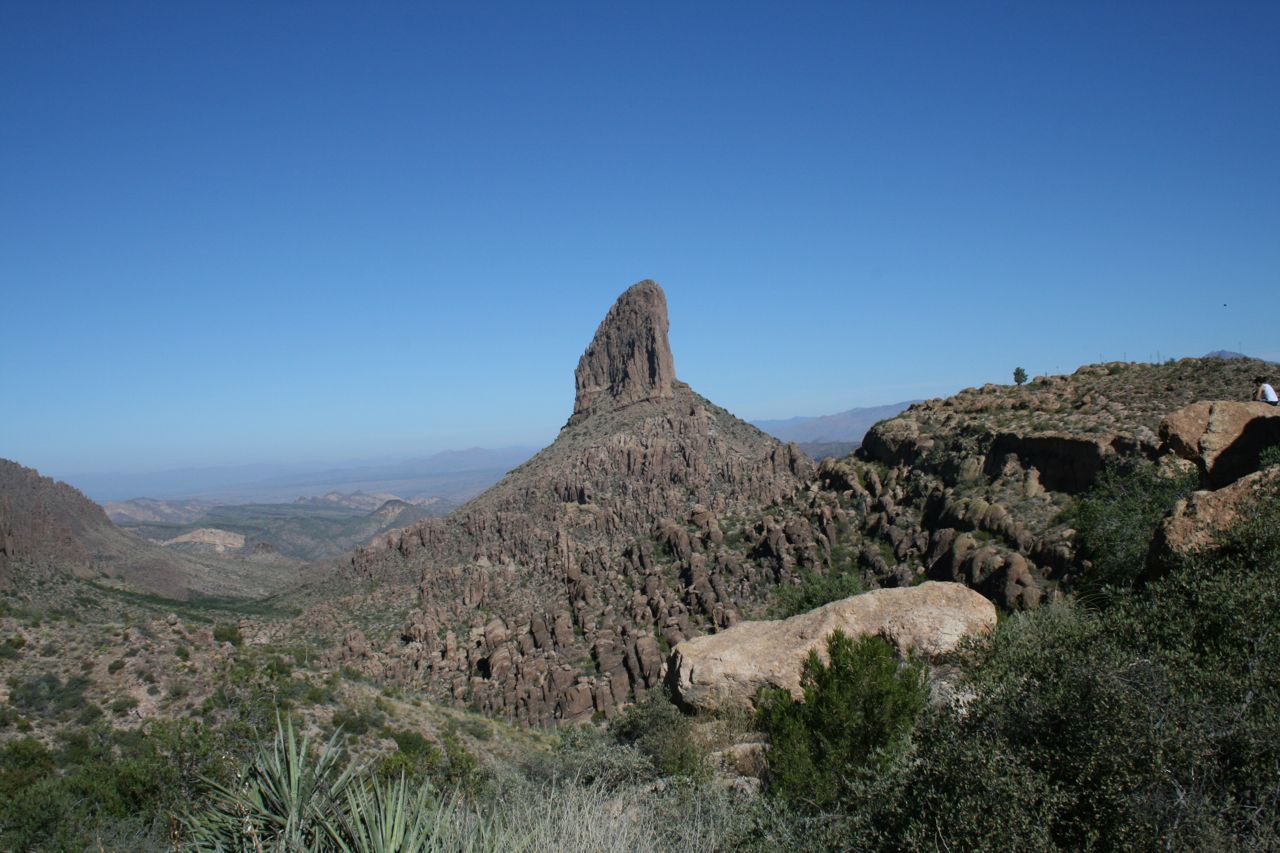
Weaver's Needle
Photo by Ihelewa

The Lost Dutchman Mine is a legendary location that might be located outside of Phoenix, Arizona–in the Superstition Mountains. The mine is supposed to be chock full o' gold, but no one is sure of its precise location or if it truly exists. It is certain that a number of people have gone into the Superstitions and come out with a significant quantity of gold ore. It is also certain that a number of people have vanished in search of the mine or have been found dead after having gone to the mountain. More than that is speculation.

The first prospectors ever to go in search of the Lost Dutchman Mine were told of its existence by the local Apache Native American tribesman. The Apache seem to have known of gold in the mountains for a long time before white men came in search of it. However, the Apache believed that their Thunder God resided in the mountains and would punish anyone who looked for gold there, so they refused to tell anyone where the gold was located.

In 1540, Francisco Vasquez de Coronado came to Arizona from Mexico in search of the Seven Golden Cities of Cibola. The Apache told him of the gold in the Superstition Mountains, so he decided to look for it. He and a group of men went to the mountains in search of the gold but were waylaid by horrific tragedies. The men of the party kept vanishing, some were found dead with their heads removed from their bodies, while others simply disappeared. Those who survived would not venture near the mountains again. They never found the gold.

In 1845, Don Miguel Peralta left Mexico specifically to find the gold in the Superstitions. (At this time the Lost Dutchman Mine did not exist, even in legend.) He evidently found a very rich goldmine. He marked the location by carving his name into Weavers Needle and returned home for some mining supplies and workers. Soon after he returned to Arizona with his equipment and men, he began sending large quantities of gold home to Mexico.

Things did not turn out well for Miguel, despite his having apparently found the Lost Dutchman Mine. The Apache became restless because of the group’s presence in the mountains and so they planned to attack the mine. Peralta heard of this and closed the mine, hiding the entrance. The Apache killed him and all of his men as they attempted to leave the area. Their remains and the gold they had carried with them were reportedly found throughout the area for years to come.

Further evidence that there was gold in the mountains came in 1870, when an army doctor by the name of Abraham Thorne was brought to the mountain by a group of Apache who respected the help that the doctor had given them on their newly formed reservation. They blindfolded the man and brought him to a canyon where they removed the blindfold. The doctor said later that he found gold piled up there for him, but that he did not see a mine.

Not long after the Apache led the doctor to gold, the eponymous Dutchman came to the Superstition Mountains. The Dutchman was actually a German man by the name of Jacob Walz who came to the mountain in search of gold with his partner Jacob Weiser. Not long after the duo went to the mountain, they came out and began spending gold nuggets in Phoenix. There is much speculation regarding whether the men actually found their Lost Dutchman Mine, if they actually stole the gold or if they had found a hidden cache from the Peralta party. The speculation continues to this day.

During the following twenty years, Jacob Walz was seen spending gold nuggets intermittently, but always after a trip to the Superstitions. Jacob Weiser was not as lucky. At some point during those twenty years, he disappeared. There are many stories about what happened to the second Jacob, but the manner of his disappearance has never been proven. Waltz dropped hints about his having found a mine, but he never showed anyone the location. He claimed to have hidden it completely before his death in 1891. Following his death, the Dutchman and the Lost Dutchman Mine passed into legend.

Many people have gone in search of the Lost Dutchman Mine since that time, but to this day, no one has proven it exists. In fact, people seem to meet their doom rather than find gold when they go prospecting at the Superstition Mountains. A surprising number of people have been found in the mountains with fatal bullet wounds, but what is even worse is the number of people that have been decapitated there and the period of time over which the decapitations happened. These horrific deaths obviously lend to the mystery of the Lost Dutchman Mine because people still go to the Superstitions in search of gold to this day.

The Mysterious Mekong River Lights


The Mekong River is one of the longest rivers in the world. It starts in the mountains of Tibet and flows through China, Myanmar, Thailand, Vietnam and Cambodia. The section of the Mekong River that is located near Nong Khai, Thailand is home to an odd phenomenon that has some scratching their heads while others cry hoax. This phenomenon is known as the Mekong River Lights, the Naga Lights and the Nekha Lights.

The Mekong River Lights are red balls of light that appear on the surface of the Mekong River near Nong Khai, Thailand during the October full moon ever year. The lights appear to dance for a moment before shooting up into the sky and vanishing. Some eyewitnesses say that the lights originate at the bottom of the riverbed and that they burst forth when they reach the surface. The lights reportedly happen at other times of year too. The October full moon is just the most popular time to view them.

There are those who say that the Mekong River Lights are a hoax; however, they have been occurring for so long that they have spawned their own legend. Local believers say that the Serpent King Naga lives in the river. Some say that the lights are the eggs of Naga's wife being ejected into the world. Other locals, those who call them the Nekha Lights, believe that the large Nekha fish that dwell in Mekong River cause them. The latter seems more likely, but still unlikely.

Those who claim that the Mekong River Lights are a hoax say that locals set off some sort of rockets or flares to attract tourists. There are a few problems with this theory, though it still may be true. Firstly, why would they spend the money to do this outside of the October full moon? That is when tourists are drawn to the site. Secondly, the Mekong River Lights are not accompanied by the bangs, hisses or whistles that would be a dead giveaway. Lastly, the Mekong River Lights have been around for at least a hundred years, likely longer. How would this hoax be carried on and kept secret for so long?

Dr. Manas Kanoskin of Nong Khai, Thailand believes that methane pockets, which are pulled to the surface by the full moon, cause the Mekong River Lights. An engineer who recently built a bridge in the area says that there is no way. The bed of the Mekong is too rocky near Nong Khai to have methane build up like that. Other experts disagree with Kanoskin as well. However, unless there are tests done in the area, no one can say for sure one way or the other. The locals will continue believing it is the Serpent King and the scientists will continue arguing over the issue or ignoring it altogether until then.

The fact of the matter is that the Mekong River Lights are certainly real. Thousands upon thousands of people have witnessed them. They have been written about, photographed and made legend. There is no denying their existence. There is just the small matter of what they are exactly.


Sokushinbutsu: The Art of Self-Mummification


Many cultures on Earth mummify the dead. There are even cultures that made mummies inadvertently by burying them under the right conditions. Therefore, mummies are relatively common. However, it is nearly unheard of for people to mummify themselves, but it has happened. In Japan there are more than two-dozen mummies, known as the Sokushinbutsu. These Sokushinbutsu were very dedicated monks who committed suicide for the sake of mummifying themselves and achieving holiness.

The monks who performed Sokushinbutsu were followers of an ancient form of Buddhism known as Shugendo. For Shugendo monks, performing self-mummification was not suicide.  It was the ultimate act of self-denial and a way to separate themselves from the material world. Of course, that didn’t change the fact that it was suicide to the rest of the world and so, the gruesome practice was made illegal in Japan in the late 1800's.

Sokushinbutsu began with the monk drastically changing his diet. Most sources say that the monk would go for three years on a diet of nuts and seeds. He would also begin exercising vigorously, in order to shed any excess body fat that might hinder the mummification process. After three years of this diet, the monk would then change his diet to one of bark and roots for another three years. After a time, the monk would also begin ingesting a poisonous tea made from sap or arsenic-laced water. The amount of poison in these drinks was presumably nonlethal. The drinks were meant to aid in the loss of fat in life and to deter insects after the monk’s death. The time frame of this diet and its progression differ from source to source, but the contents are certain.

At the end of the second three-year period, the monk would then place himself in a small coffin-like box (seemingly of brick, stone or wood), in which he could do nothing but sit in the lotus position. A breathing tube was introduced into the chamber and the monk given a bell before the box was closed. The monk would then ring the bell every day until he starved to death. When the bell no longer rang, his fellow monks knew he was dead. After a period of one thousand days, they would open the box and determine whether the monk had achieved Sokushinbutsu. If the body had begun to decay, the box was permanently sealed and buried. If the body had not, the monk had achieved Sokushinbutsu and he was reverently put on display and worshiped as Buddha.

Today, there are a little more than two-dozen Sokushinbutsu in Japan. Eight of these mummified monks are on display in the Dainichi and Churenji temples. They are still thought of as Buddha by their brethren. To the rest of us, they are either testaments to the amazing power the mind can have over the body, or they are proof of how horribly far a person’s beliefs can take them. Either way, it is hard not to be amazed at the ability of Sokushinbutsu to carry out their very own mummification.

World's Largest Geoglyph Still a Mystery: Southern Australia's Marree Man


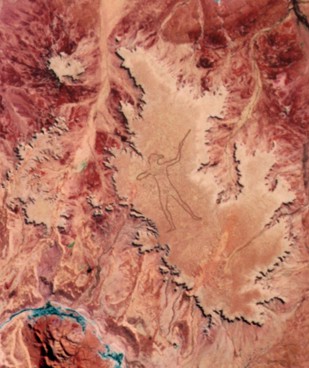
The Marree Man from above
Geoglyphs are works of art that are made either by making mounds out of material like rocks or soil or by digging lines or shapes into the soil. Most geoglyphs are impossible to see as art at ground level. However, if you view them from a plane, their shapes become clear. Some examples of geoglyphs are the Nazca lines in Peru and the Serpent Mound in Ohio, U.S.A. These are examples of rather large and well-known geoglyphs that have been around since long before our time. We also have a relatively good idea of who made them. Oddly, the largest geoglyph in the world is only a few decades old and nobody seems to know who made it. This geoglyph is called the Marree Man and it is located in the outback in southern Australia.

A pilot that was flying over the plateau on which the geoglyph is located discovered the Marree Man in July of 1998. The tremendous work of art was largely ignored, however until a local hotel owner received an anonymous fax regarding the Marree Man. The hotel owner told the local newspaper about it and the story ran on July 15, 1998. It was then the public realized there is a giant, mysterious geoglyph less than three miles outside of Marree.

The Marree Man depicts a standing aboriginal hunter with a spear or possibly a boomerang in his hand. The nude man is roughly two and a half miles tall. Some experts believe that it is remarkably accurate in its depiction of an aboriginal hunter. However, others say that it is incorrect. Either way, it is a very astonishing work of art. Experts believe that it was completed shortly before it was discovered; yet nobody noticed that it was being made. In fact, no one has ever come forward and admitted to making it. This is very surprising because whoever did it did not commit a crime.

Despite the fact that no one has come forward to explain the Marree Man to the world, experts have a good idea of how it was made. The outline of the geoglyph was made by removing the vegetation from the soil where the lines were. There was also a layer of soil removed to reveal the lighter soil beneath, thus making the Marree Man stand out against its surroundings. It is thought that the work was accomplished by using tractors or plows to move the materials, judging by tread marks left at the scene. It is also thought that the artist or artists used GPS to map out their design and make it as accurate as it is.

Today, the Marree Man is slowly fading, but it is still clearly visible from a plane. However, it will eventually erode away. For now, there is no way of knowing why it was even put there to begin with. Indeed, it may never be known who made the Marree Man or why they did it.

Update: As of fall 2016, the Marree Man is much clearer due to restorations conducted in collaboration with the aboriginals in the area. There is hope that the new grooves will fill with water and turn the dusty old Marree Man green!

Sources

Marree Man, retrieved 9/23/09

Cryptids: The Mongolian Death Worm


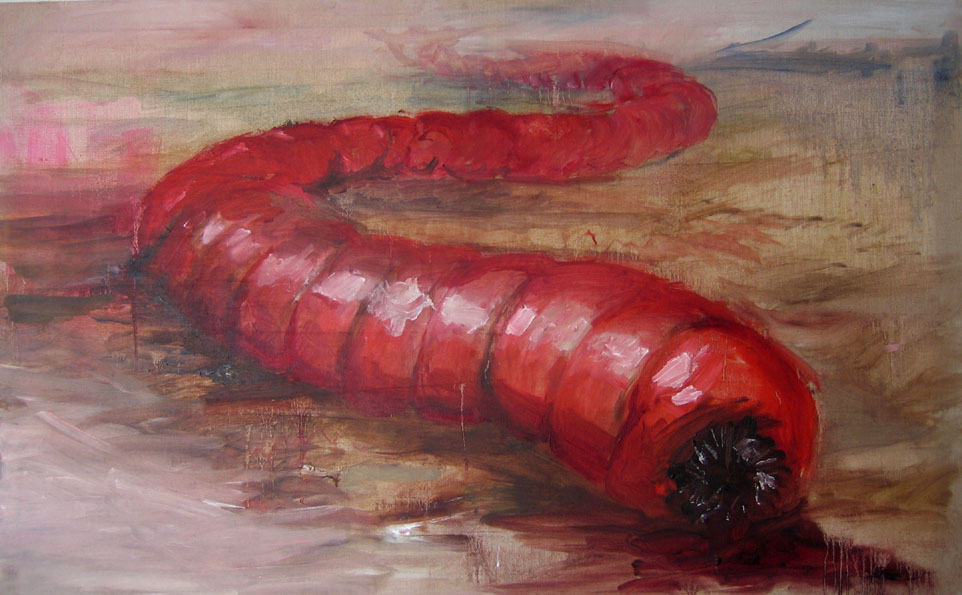
Artist's rendition of a Mongolian Death Worm
Pieter0024
Cryptids are animals that, like the Loch Ness Monster and Bigfoot, have supposedly been sighted a significant number of times, but there is no concrete evidence of their existence. The Mongolian Death Worm is yet another monstrous addition to this category of mysteries. Its existence cannot be proved, which makes it equally hard to deny it.

The Mongolian Death Worm is thought, by some, to reside in the hotter southern region of Mongolia's Gobi Desert. It reportedly lives in the sand, where it spends ten months out of the year hibernating in burrows. It comes out of the ground in June and July. They say you can only see it above ground when it has been raining.

Mongolian Death Worms are worm-like creatures that are as thick as a human’s arm. They can grow to be between two and five feet long and are red, sometimes with dark spots. Its color has been likened to that of blood or salami. Some descriptions give the creature spike-like protrusions at both ends of its body. It is said that there is no way of discerning which end of the creature is its head and which its tail. It moves across the sand by rolling around or squirming.

This creature gets its formidable name from reports that it has the almost supernatural ability to kill anyone that touches it. Reports say it can kill a person or animal from a few feet away. The Mongolian Death Worm spits a deadly corrosive toxin several feet. The toxin causes instantaneous death. Another strange and deadly weapon attributed to the Mongolian Death Worm is an electrical charge that can work at a distance. Both of these claims are highly unlikely.

These cryptids are legendary among the nomadic tribes of Mongolia. However, the rest of the world only became aware of them in 1926 when Professor Roy Chapman wrote about them in his book, “On the Trials of Ancient Man.” As is the case with so many other cryptids, several expeditions have been sent out in search of the creature. As of yet, no proof of the existence of the Mongolian Death Worm has been uncovered.

It is possible that the Mongolian Death Worm is actually a known creature that is mis-remembered or miscommunicated. Of course, it could also be real, in which case, its ability to kill and its methods of killing have likely been exaggerated. Whatever the case may be, believers in the existence of this creature tread carefully when traveling in the southern Gobi Desert.

Sources

The Mongolian Death Worm, retrieved 11/29/09, virtuescience.com/mongolian-death-worm.html

The Cryptid Zoo: Mongolian Death Worm, retrieved 11/29/09, newanimal.org/deathworm.htm


The Legend of the Bell Witch

1894 drawing of Betsy Bell
During the first half of the 19th century, the Bell family of Red River, Tennessee was reportedly haunted by an evil entity. It became known as the Bell Witch, though descriptions make it sound more like a poltergeist. As is typical, the entire story is steeped in legend and conflicting accounts. Whether or not you believe in such things as poltergeists or witches, it is hard to ignore the number of people who are said to have witnessed the “Bell Witch” in action.

John Bell and his wife Lucy moved from Kentucky to Tennessee during the early 1800s. The couple had two children that had already married and lived away from them by then. After moving to Red River, they had three more children together. Elizabeth, known as Betsy, was born in 1806, Richard was born in 1811 and Joel was born in 1813. The family did well in their new home and eventually amassed a landholding of 328 acres. They also had a sizeable log home.

In 1817 John Bell was working in his fields when he saw a strange animal with the body of a dog. He shot at the beast, but it disappeared. Later on that night and for many nights after, the family heard loud banging noises on the outside of their house. John tried to discover the source of the noises, but came up with nothing. Not long after, the children began complaining about the sound of rats chewing on their bedposts and that something was ripping off their covers as they slept. Soon, the entire family was hearing whispers around the house.

The Bell Witch began to focus on Betsy. It would supposedly attack her physically and so brutally that it left visible marks and even handprints on her skin. After a time, John Bell turned to his friend James Johnston for help. James and his wife decided to stay at the Bell home for a few nights. Apparently they suffered the same indignities as the Bells. The voice was gaining power as well and had begun conversing with people who spoke to it. It also sang and said things that were religious in nature.

General Andrew Jackson himself became interested in the story and decided to come to the home in 1819. Apparently one of his men had a run in with the witch and the story goes that Jackson spoke to it himself. The very morning after Jackson arrived at the Bell home, he was seen in Springfield, so he must not have stayed long. Jackson’s visit lends some credibility to the story. He did, after all, become President of the United States later. However, the story is still wildly incredible.

When Betsy became engaged to a local boy named Joshua Gardner, the Bell Witch wasn’t happy and decided to torment the young couple. Betsy eventually broke off the engagement. However, the only person that the witch truly seemed to hate was John Bell.

Some stories say that the witch claimed to be the spirit of a neighbor who felt cheated in a land transaction and recently died. Whoever or whatever it was, it supposedly tortured John during a prolonged illness he was having that involved seizures and difficulty controlling his throat. There are even claims that when John Bell died on December 20, 1820, the entity said that it had poisoned him. Stories say the family found a vial of poison in a cupboard that backed up the witch’s claim.

The witch became less active after John Bell’s death, but promised to return to his wife in seven years. It is said that it came back and spent a lot of time talking to John Bell Jr. about theology, history and life. It then left saying that it would return to his descendants in 107 years. There have been no claims from John’s descendants that this has happened. Of course, we can’t be sure that any of this happened.