Showing posts with label Bizarre Disappearances. Show all posts

Mysteries in United States History

The history of the United States is short when compared to that of other countries. Nonetheless, it is riddled with mysteries. Assassinations, disappearances, murders and more have left history experts and buffs baffled. When it comes to the following mysteries, even when there seems to be proof that leads to one answer, something does not fall into place and we are left with questions.

J.F.K. White House Portrait
J.F.K. White House portrait
Mysteries in United States History: The Assassination of President John Fitzgerald Kennedy

President John Kennedy or J.F.K. was assassinated in Dallas, Texas on November 22, 1963 at about 12:30 p.m. He was in a limo, seated next to his wife, when a bullet struck him the neck and then another hit him in the right side of his head. He was declared dead half an hour later. The nation was shocked. It is seen as one of the most tragic events in United States history to this day.

Later on that day, a man named Lee Harvey Oswald was arrested for the murder of the president and a police officer who attempted to question him. Oswald worked for the Texas School Book Depository, from which the shots appear to have come. A rifle and three shell casings were found near a sixth floor window in the building. Oswald maintained his innocence while in custody, though the evidence against him was, and is, strong. He never did get the chance to stand trial. He was murdered by Jack Ruby on November 24. Ruby shot Oswald while he was being transferred in police custody.

Many questions remain regarding the murder of this beloved president. Did Oswald do it? If so, (and it seems so) did he act alone? Was there another shooter? Was Oswald part of a conspiracy? Some evidence points to another shooter and/or a conspiracy. Jack Ruby claimed all sorts of heroic reasons for killing Oswald. Nonetheless, he comes off as an unsavory character, the type who would murder a man to keep him quiet. Alternatively, he could have murdered him because he was paid to do so. None of these questions has suitable answers. It could be that Harvey did act alone. It could be that he was just a piece of a much larger puzzle.

Elizabeth Short mugshot
Mysteries in United States History: The Black Dahlia Murder

On January 15, 1947, a body was found by the side of a road just outside of Hollywood. The body belonged to the victim of a particularly gruesome murder. Her name was Elizabeth Short and she would become known as the Black Dahlia.

Short had been cut in half, her lips sliced from the corners up her cheek on either side, giving her a grotesque grin, she had been disemboweled and their was bruising on her wrists and ankles. This is just a glimpse of the many ways she was reportedly defiled. Pictures of her poor, brutalized body hit the papers and the nation was enthralled. Of course, they were also terrified.

A large-scale investigation into the murder was conducted, but it turned up nothing useful. To this day, the murder has not been solved. In fact, the case has gone cold and police refuse to reopen it. There was so much hype that the investigation was severely impeded. Even now, people come forward claiming that they have clues regarding the murder. Sadly, Beth's murderer will never be brought to justice. Chances are he or she is long dead, along with the struggling actress whose life was ended at the age of 22.

The Baptism of Virginia Dare by William A. Crafts
Mysteries in United States History: The Lost Colony of Roanoke

On July 22, 1587, a group of settlers from England arrived at the island of Roanoke in what is now Virginia. They were led by a man named John White-the only settler whose fate is known. Shortly after they arrived, they concluded that they did not have the resources to survive in the hostile territory. John White decided to return to England for help. He was unable to return for three years.

John White arrived at Roanoke on August 18, 1950. Not one settler remained. John White's daughter and granddaughter were among the missing. There was no sign of foul play and no suspicious remains. The only clue was two carvings, one in a post, and the other in a tree. The first read "Croatoan." The second read "Cro." Croatoan was a nearby island, where the settlers might have gone. Unfortunately, John was unable to investigate. No one is sure where the settlers went, if anywhere.

Amelia Earhart
Amelia Earhart
Mysteries in United States History: The Disappearance of Amelia Earhart

Amelia Earhart was a beloved and exceptionally famous aviatrix. She was a dynamic go-getter and record-setter. Therefore, when she attempted to be the first person to fly around the world, it was a highly publicized event. It was not as highly publicized as her disappearance, however.

During the last leg of Amelia Earhart's flight, she vanished somewhere near Howland Island in the Pacific Ocean. Her last transmission was heard on July 2, 1937. She, her plane, and her navigator-Fred Noonan-were never seen or heard from again. Her plane was low on fuel and Howland was the only land in the area. Chances are she and Fred went down in the ocean and died as a result of the crash or from drowning. Some believe that she survived and ran off. This is highly unlikely, given the circumstances of her disappearance. She was declared dead in 1939.

There is something sad about mysteries like these going unsolved. That may be why each of these mysteries has been written about, made into movies and talked about since they occurred. There is something discomforting about a sad story going unsolved. We would like to see all the heroes' deaths avenged and their bodies given proper burial. We would like to know the fate of families just trying to make their way in strange new lands.

Sources

Biography, retrieved 8/28/10, ameliaearhart.com/about/bio.html

Scheeres, Julia, Black Dahlia, retrieved 8/28/10, trutv.com/library/crime/notorious_murders/famous/dahlia/2.html


Krajicek, David, JFK Assassination, retrieved 8/28/10, trutv.com

Bizarre Disappearance: Frederick Valentich

Map of Valentich's Flight
Frederick Valentich was an Australian pilot who disappeared on October 21, 1978. His disappearance is surrounded by mystery, controversy and skepticism. The reason for this is that his disappearance seems to be connected to an unidentified flying object that Valentich himself claimed was 'playing games' with him in the minutes before radio control lost all contact with him. He was twenty-years-old at the time.

On October 21, 1978, at 6:19 p.m., Frederick Valentich left Melbourne, Australia to begin a 125-mile training flight to King's Island. It was only Valentich's second solo night flight. He was flying a single engine Cessna 182L. At a little after 7:06 p.m., Frederick Valentich made radio contact with air traffic controllers in Melbourne to inquire if there were any other aircraft known to be flying in the area. The answer from Melbourne was no, an answer that was confirmed again during the odd communication that followed.

From Frederick Valentich's six-minute exchange with air traffic control, we can piece together some information about what it is that he saw, claimed he saw or thought he saw in the sky over Bass Strait that night. After receiving information that he was supposed to be the only thing in the sky at his location, Valentich told controllers in Melbourne that something was flying near him. When asked if he could confirm that it was an aircraft, he said that he could not, a statement that he repeated several times during the exchange. He described the object as having at least four lights and one green light, he said it was elongated (many sources say cigar-shaped, but Valentich made no such statement.) and "all shiny on the outside."

At one point, Frederick Valentich said that he was unable to tell what it was because of the speed at which it was traveling. However, the unidentified flying object supposedly went out of sight and then approached him from different angles several times, so he was able to ascertain the above information, but nothing more. Near the end of the exchange between Melbourne air traffic controllers and Frederick Valentich, Frederick complained that his engine was coughing. Not long after, radio communication was lost.

Interestingly, some sources claim that the exchange went on after this and that Valentich said his Cessna was engulfed in a green light and he was burning. I have found no proof of this in my research. Another claim is that the end of the transmission contained a loud noise like metal scraping on metal. This claim seems more valid and may very well be truth. It is hard to know because audio of the exchange is difficult to find. The last words that air traffic controllers officially heard Frederick Valentich speak were "It is not an aircraft." Extensive searches for the pilot were conducted. No sign of Frederick or the Cessna was ever seen again.

Interestingly, there appear to have been numerous UFO and/or strange light sightings in the King's Island and Bass Strait area on the night that Frederick Valentich disappeared. There also may have been sightings both in the weeks before and after the event. The number of reported UFO sightings in the area range anywhere between 11 and 50, depending on the source. Some sources even claim that all of the sightings were reported after Frederick Valentich's disappearance was made public. At this point, the information has become so convoluted that it would be nearly impossible to come up with a definite number of sightings and verify each of them.

One interesting fact that is worth mentioning here is that Frederick Valentich had studied UFOs in the past and had a particular interest in them. Does this mean that he made it all up? Of course not. Does it mean that aliens targeted him because of his interest in UFOs? That is highly unlikely. Frederick Valentich may very well have encountered a UFO on his flight that fateful Saturday evening. However, whether said unidentified flying object had anything to do with his disappearance is impossible to ascertain. The most likely of scenarios is that he encountered engine trouble (with or without the help of a UFO) and crashed into the ocean, where the plane, and possibly his body, remains to this day.

Several theories have been set forth regarding the disappearance of Frederick Valentich. All of them are rooted in some truths, though all are speculations, due to the fact that we cannot verify what happened to Valentich that night. One theory is that Frederick was playing an elaborate practical joke, yet his father later said that Valentich would have taken such a thing very seriously. Another theory is that Valentich committed suicide, but wanted to go out 'with a bang.' There is nothing to suggest this, apart from the fact that he disappeared. Another is that he was either killed or taken by aliens. There is no way to prove or disprove that suggestion. Lastly, there is a theory that Frederick Valentich's engine troubles came from 'interference' from the unidentified flying object, whether intentional or not. This is yet another theory that cannot be proven, but it is supported by the fact that Valentich reported engine troubles during his encounter with it. However, this is hardly evidence of the truth of the theory. The fact is that we may never know and theories may simply get wilder and wilder given time.

Sources

The Frederick Valentich Accident, retrieved 5/12/10, ufologie.net/htm/valentich.htm

Australian Pilot Frederick Valentich Disappears, retrieved 5/12/10, ufocasebook.com/australianpilot.html

Bizarre Disappearance: The Flannan Isles Mystery

Flannan Isles Lighthouse
Photo by Marc Calhoun
The Flannan Isles are a group of rocky, uninhabited islands in Scotland. They are named for St. Flannan, but are also known as the Seven Hunters. One of the largest of these seven islands is a rocky cliff-edge island known as Eilean Mor. Eilean Mor has a grassy hilltop at its apex. Perched atop this grassy hill is a lighthouse that is known as the Flannan Isles lighthouse. The Flannan Isles lighthouse was the scene of three mysterious disappearances roughly one year after it was built. Three men vanished from the lighthouse without a trace. There was no sign of a disturbance and very few clues to the nature of their fate. The scene was reminiscent of that aboard the Mary Celeste when her crew and passengers famously disappeared roughly thirty years before.

On December 7, 1900, Donald MacArthur, Thomas Marshall and James Ducat arrived at the Flannan Isles lighthouse to begin their two-week rotation as keepers of the lighthouse. The Superintendent of Lighthouses, Robert Muirhead came with them to do a routine check of the lighthouse and speak to the men. He made certain that everything was in working order and then spoke with James Ducat about some difficulties they were having with the heavy mist that commonly surrounded the island. The men then said goodbye to the Superintendent and he left.

The lighthouse was regularly monitored from the mainland by telescope. This way, if there were an emergency, the men could signal for help. Unfortunately, there was the problem with the mist. The lighthouse was seen on December 7 and December 12. The lighthouse was also seen on December 15 by a passing ship. The crew noted that the light was not shining, as it should have been. It was not seen from land again until December 29, well after the men should have ended their rotation.

The ship that was to deliver the men's relief and bring them home from the Flannan Isles lighthouse was delayed until December 21, because of a run of bad weather. When the ship, the SS Hesperus, arrived at Eilean Mor, the men on board expected to see a flag flying to indicate that the keepers had noted their arrival and would be deploying a rowboat to retrieve their relief. However, the flag was not flying, nor did the men respond to a siren. A landing craft with two men on board was launched from the SS Hesperus with two men on board.

When the two men reached Eilean Mor, one man, Joseph Moore, went up to check the lighthouse for the three missing men. He found the entrance locked. He unlocked the door and entered to find the Flannan Isles lighthouse unmanned. The clock on the wall had stopped, no fire was in the grate (nor had one been there for a few days), there was a meal sitting at the table. It looked like someone had set it down with the intention of eating it soon, but it was untouched. Whatever had happened to the men, it had happened to them suddenly. There was nothing anyone could do about it with so few clues, so four men, including Moore, were left on the island to operate the lighthouse and everyone else left.

The records of the missing men were subsequently inspected. It was discovered that Eilean Mor was hit with a strong storm on December 14. The last entry was made on the afternoon of December 15. Superintendent Muirhead concluded that the men must have been taken by nature when they left the lighthouse to repair some damage that was done to a storage container outside during the storm. One of his theories (the most likely) was that a large wave came up on the men while they were working and swept all three of them into the Atlantic Ocean, where they died.

Muirhead's theory is largely regarded as truth. The only other alternatives seem to be that the men left of their own accord, they were kidnapped, aliens intervened or they were sucked into another dimension, all of which seem ludicrous. Unfortunately, none of their bodies was ever recovered, so there is no way to be sure.

Sources

The Mystery of Flannan Isle, retrieved 4/20/10, bbc.co.uk/dna/h2g2/A1061335

Flannan Isles Travel Guide, retrieved 4/20/10, scottishholidays.net/visit/scotland-tour-western-flannanisles.html

The Mysterious Disappearance of Theodosia Burr Alston

Theodosia Burr Alston
Theodosia Burr Alston was the daughter of an infamous former vice-president of the United States, Aaron Burr. Her father’s name lives in infamy because of a duel that he fought and won against Alexander Hamilton, which resulted in Hamilton’s death. He was also arrested for conspiracy when it was suspected that he was trying to plan a coup. Theodosia, however, is not known only for being the son of this man. She is known for her mysterious disappearance in 1813.

On December 30, 1812, Theodosia Burr Alston boarded a schooner ship known as the Patriot. She was leaving her home in South Carolina to visit her father in New York. Her father’s name had already been ruined, due to the incidents mentioned above. However, Theodosia stood by her father and maintained his innocence throughout. The two were very close. Also, Theodosia had lost her only son, Aaron Burr Alston, only months before and her father thought it would be good for her to come see him. In reality, they would never see each other again.

The Patriot should have made it to New York in a matter of five or six days, but it never arrived. Investigations were made into the schooner’s whereabouts and it was discovered that a British ship off of Cape Hatteras had stopped the schooner on January 2, 1813. No one had seen it beyond that date. So Theodosia had to have met with some accident or incident between January 2 and January 4.

No more was heard about the Patriot until twenty years later when a known pirate confessed that he and some other men had boarded and looted the vessel. He also claimed that they killed everyone on board. After another fifteen years had passed another pirate made the same claim. It seemed as if this was the fate of Theodosia Burr Alston. However, no concrete evidence of her fate emerged and then the story got a little weirder.

The pirates claimed to have killed every single passenger and crewmember on board the Patriot. Yet, there is a story that a ship washed up in the mouth of the San Bernard River in Texas after a big storm a few years after Theodosia’s disappearance. An English-speaking Native American Karankawa warrior found the ship and inside was a naked woman chained to the it. The only thing on her person was a locket. The locket belonged to Theodosia Burr Alston. Shortly after the warrior found her, the woman supposedly died. He buried her along the banks of the river and covered her grave with a door from the ship. If this were true, it would mean that she was taken prisoner by pirates and held captive. Whether or not this is true is a matter of speculation, but there are records of the existence of an English-speaking Karankawa warrior from Texas.

It is certainly possible, if not likely, that pirates killed that Theodosia Burr Alston. How and when is unclear. The testimony of pirates and tales from more than 100 years ago are all the evidence we have to go on. So, it is hard to say with any certainty. However, we can probably safely assume that Theodosia did not survive long after leaving her home in South Carolina, whether she was the victim of pirates or a victim of a freak accident at sea.

Sources

Mysterious Theodosia, retrieved 4/4/10, theoutlaws.com/people3.htm

Hause, Eric, The Fate of Theodosia Burr, retrieved 4/4/10, coastalguide.com/packet/theodosiaburrmystery.shtml

Bizarre Disappearance: Ambrose Small

Ambrose Small was a wealthy theater owner from Ontario, Canada. He was also a womanizer, a gambler and possibly a cheat. He disappeared in December of 1919. As is wont to happen when men of his caliber disappear, there were many suspects and many false leads, making it difficult to solve the case. To this day, the only sightings of Ambrose Small since his disappearance are that of his ghost at his biggest theater–The Grand Opera House.

Ambrose Small was born in 1863. His father owned a small hotel in Toronto where Ambrose began working when he was 13 years old. It was not long before Ambrose took on small management tasks, including arranging entertainment for the hotel. Ambrose also had a part time job at the Grand Theater. Over time, he became very successful at booking entertainment, which led to a lucrative career in the field.

With success came a love for gambling and women. Ambrose Small was a notoriously avid gambler. It is also said that he was a cheat. It is quite possible given that he seemed to win a bit more than he lost. As for women, showgirls were his disposable female of choice for a time. He went from one beautiful hopeful to the next, capitalizing on the pretty women's hopes for a career in show business.

Despite Ambrose Small's penchant for a variety of women, he married a rich heiress when he was 39. It is highly likely that Ambrose married his wife Teresa for money rather than love. His behavior both before and after the wedding are evidence of this. Very soon after Ambrose and Teresa Small were married, Ambrose began using his wife's money to buy theaters and fill them. He bought the Grand Opera House, where people have claimed his ghost resides. Ambrose also continued seeing other women, one named Clara Smith in particular. He even had a room built in the Grand Opera House for the sole purpose of having extramarital relations.

Ambrose Small was a scornful man in his success. He treated other people as if they were below him. He continued to make enemies in love, business and gambling. He also lost interest in his business. Ambrose was so consumed by his lifestyle that he had given over most of the control of his theaters to his personal secretary–John Doughty. In the end, he decided to sell them.

On December 2, 1919, Ambrose Small sold all of his theaters to Trans-Canada Theaters Limited for 1.7 million dollars. The deal was made good with a check for one million dollars and the promise for $700,000 more. Both Theresa and Ambrose signed the check and deposited it into their bank account. Ambrose went on to have two meetings with his lawyer and then he disappeared.

It was days before anyone began searching for Ambrose Small. Teresa Small suspected that he was just up to his usual bad habits, or that is what she said. His mistress, Clara Smith did not report anything, either. When the search finally did begin, it was a massive one. Police teamed up with all kinds of reward hunters (Clara had put up a 50,000 dollar reward), but they came up with nothing but a few dead-end facts and rumors.

Interestingly, John Doughty disappeared on the same day as Ambrose Small. He was eventually found in Oregon and charged with stealing a little over 100,000 dollars in bonds. This was, of course, very suspicious, but there was no evidence that tied him to the disappearance of Ambrose Small. He could have been planning to steal the money and run because he knew Ambrose had just sold the theaters. His disappearance on the same day may have been a coincidence, albeit a strange one. Both Clara and Teresa were implicated, but there was no evidence in that direction either. Countless tips came in, but after all these years, nothing has turned up.

Sources

Taylor, Troy, Ambrose Small, retrieved 9/11/10, prairieghosts.com/ambrose.html

Cumerlato, David, The Disappearance of Ambrose Small, retrieved 9/11/10, hauntedhamilton.com/gotw_ambrosesmall.html

Bizarre Disappearances: Vermont's Bennington Triangle

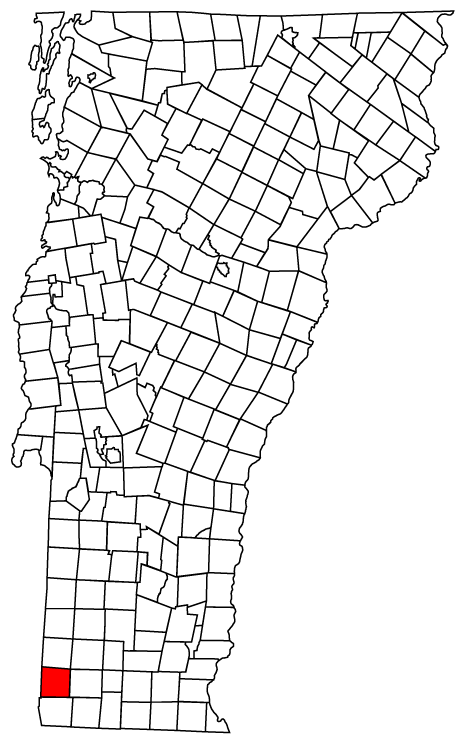
Location of Bennington, VT
The Bennington Triangle is reportedly a place in Vermont, near the Glastonbury Mountain, in which at least five or as many as ten people have disappeared. Most of these disappearances occurred without a single clue being left behind. The victims were people of varying age and of both sexes. Ninety-percent of all the victims were lost within a five-year period between 1945 and 1950. All of the disappearances happened in the months of October, November and December. Apart from those differences and similarities, there is very little else known about the nature of the disappearances in the Bennington Triangle.

The first disappearance in the Bennington Triangle was reportedly that of a man named Henry MacDowell. Henry was placed in a lunatic asylum after he murdered a man named Jim Crowley. He subsequently escaped from the lunatic asylum and vanished. Of course, it is heard of for a man who has been convicted of a crime and has managed to escape his captors to vanish on purpose. Nonetheless, this is often cited as one of the Bennington Triangle disappearances.

The most well-known Bennington Triangle disappearances began in 1945 with a man named Middie Rivers. Middie was serving as a mountain guide in the area on November 12, 1945. When he was guiding his group back to their camp, he got ahead of the bunch and was never seen again. The event happened near the Long Trail Road, an area that 75-year-old Middie was presumably familiar with. Police and volunteers searched for him, but no clue to his fate was ever found.

A little over a year later, on December 1, 1946, an 18-year-old student named Paula Welden went hiking on Long Trail. She received a ride there, but was alone on her hike. She was never seen again and no trace of her has ever been found.

There are also reports that three hunters went missing in the area in 1949, but very little can be found about these supposed disappearances. More is known about another disappearance that happened that year on December 1. A man named James E. Tetford vanished on a moving bus. He got on the bus in St. Alband. Witnesses saw him on the bus before its stop in Bennington, where James would have disembarked. However, by the time the bus reached Bennington, James was gone. This is perhaps the strangest disappearance that has occurred in the Bennington Triangle.

The following year, on October 12, an eight-year-old boy went missing. His name was Paul Jepson. Paul’s mother had been doing some chores and had left him for a short period. When she got back, her son was gone. Dogs followed his scent, but it was lost on a highway. Because of this, it is thought possible that the boy was abducted.

The last known disappearance in the Bennington Triangle was that of a woman named Frieda Langer. However, it probably shouldn’t be dubbed a disappearance. Frieda was hiking with her cousin on October 28, 1950 when she decided to head back to camp to change, after falling in some water. Her cousin stayed behind. Frieda never made it back to camp or her cousin. A massive search was mounted on the ground and from the air. Police, volunteers, firemen and military sought the woman, but nothing turned up until the following May. Oddly, her body was found in a field that had been searched extensively in the previous months. Supposedly, her cause of death was unable to be determined because of the condition of the body, which had obviously been left to the mercy of the elements.

There are several theories as to the nature of the Bennington Triangle disappearances, but none of them hold up very well. The first is that there was a serial killer on the loose. Well, that is possible, but it would have had to be a very indiscriminate serial killer. It is not often that you find a serial killer who kills people of all ages and both sexes without leaving a single trace. Another theory is that the disappearances all happened in the fall and winter because there was more leaf litter on the ground, which may have hidden some wells that the victims simply fell in. However, this could not possibly explain the Frieda and James’ disappearances. Also, no wells were found in the searches and no one heard someone crying out from within a well. In reality, the whole thing could just be a coincidence with each case having its own unique cause.

The Mysterious Disappearance of Bobby Dunbar

The fake Bobby Dunbar (1913)
The mystery of Bobby Dunbar is one that is almost more terrifying than a murder mystery. It is the story of a child lost and another likely taken from its mother and guardian to replace the lost boy. In that way, it is the story of two boys lost, one seemingly gone forever and one taken and raised as another child. The story begins on August 23, 1912, when Percy and Lessie Dunbar took their sons Bobby and Alonzo on a trip to Swayze Lake in Louisiana. The family was from Opelousas, Louisiana. That day, 4-year-old Bobby Dunbar disappeared.

The disappearance of Bobby Dunbar made headlines and searches were conducted for either months before police found a boy they believed was little Bobby Dunbar. They found the child in Mississippi with William Cantwell Walters. Police arrested Walters and took Bobby, despite Walters claims that the boy was not Bobby Dunbar. He said the boy was in face Charles Bruce Anderson and that the boy, known as Bruce, was in his custody with the boy's mother Julia Anderson's permission.

Not long after obtaining the child, police sent for Bobby Dunbar's parents. Julia Anderson also made her way to Mississippi to plead her case. Depending on which reports from the time are to be believed, the Dunbars and their younger son Alonzo recognized Bobby immediately or took him in overnight and confirmed he was their son after giving the boy a bath. Julia was also given a chance to identify the boy. She had not seen the child in 13 months, though she said she only gave him to Walters for a two-day trip. She defended Walters, though either side of the story was sounding like kidnapping.

Julia Anderson did eventually identify the child as her son Bruce. However, a judge found that the child was Bobby Dunbar and gave custody to Percy and Lessie. Julia Anderson had three children out of wedlock, which looked bad in that day and age. Her story was also that she allowed William Cantwell Walters to take her child for two days and then had done nothing when the boy was gone for 13 months. That could not have looked good, either. There was also some suspicion that Walters was Bruce's uncle, meaning that Julia, a servant in the Walters household, had become pregnant by her boss. After the trial, she maintained that the child was her Bruce and the Anderson family considered the boy kidnapped by the Dunbars.

William Cantwell Walters was found guilty of kidnapping and spent two years in jail before being released rather than being given another trial. The boy who may have been Bobby Dunbar was raised as Bobby Dunbar and grew to be a man and have children of his own as a Dunbar. Some stories say that he visited the Andersons and even brought his own children to see them. He passed away in 1966.

In 2004, curiosity got the better of the Dunbars. Bobby's son, Robert Dunbar Jr. consented to a DNA test, as did his "cousin," the child of Alonzo Dunbar. The results were shocking to the family. The two men were not related. They should have been first cousins, had Percy and Lessie been honest about his identity. It appears they were not. Now, the question is what happened to the real Bobby Dunbar on August 23, 1912. Had his parents did something neglectful or horrible and latched onto Bruce Anderson to cover up their mistake? Had the boy drowned? Had he been kidnapped by someone other than William Cantwell Walters? There is no way of knowing.

Sources

USA Today, Breed, Allen G., DNA clears man of 1914 kidnapping conviction, retrieved 3/17/12, usetoday.com/tech/news/2004-05-05-1914-dna-x.htm

The Ghost of Bobby Dunbar, retrieved 3/17/12, thisamericanlife.org/radio-archives/episode/352/the-ghost-of-bobby-dunbar