The Strange Story of Beethoven's Immortal Beloved Letters

Ludwig van Beethoven
Ludwig van Beethoven was an 18th century musician whose music is still influential and inspiring today. His name is synonymous with classical music and good classical music at that. His legacy is more than the music he left behind, though. Unlike many other historic classic composers, Beethoven had a personality that resonated with his music. He is often portrayed in films and literature as a brooding artist who bordered on insane. He played his piano like a maniac until he went deaf and then he played it like an outright lunatic, if the stories are to be believed. Of course, he did so in order to "feel" his music because he could no longer hear it. Nonetheless, his character stuck. He was unmarried, grumpy and extremely talented. However, upon his death, another side of Beethoven was revealed -- one that remains steeped in mystery.

The legendary composer died in 1827. He was in his 50s when he passed away. After his death, a single letter written in three parts was discovered. The letter was written to a woman he referred to only as his "Immortal Beloved." The letter seems to have never been sent. Therefore, there is no date or addressee on the letter, which consists of 10 pages. However, the papers have been dated to 1812.

It is made abundantly clear in Beethoven's letters to his Immortal Beloved that he is either very in love with her or a very smooth talker. He opens the letter with, "My angel, my everything, my very self." He goes on to say, "We will probably see each other soon . . . " and then leaves off the first part with "Your faithful Ludwig." The first part does give the impression that the two lovers have a past together and that their feelings are mutual. It also gives the impression that there is some difficulty to their relationship.

The second part of the Immortal Beloved letters opens with, "You are suffering, you my dearest creature . . . " Why is she suffering? He goes on to lament their lack of contact, giving the impression that her suffering is caused by their being apart or not getting letters from each other soon enough. He mentions he is upset that she will not get news from him until a later date. In this part of the missive, Ludwig van Beethoven writes, ". . . as much as you love me -- I love you even more deeply . . . " By now, the reader knows there is a past there, but who could the recipient be? It seems the letter was never sent. Did something prevent it? Did he simply see her before he could send the letters? Was this the last of their relationship? Why are there no more letters if this one was important enough to keep?

It is in the last part of the papers that Beethoven calls his mystery lover his Immortal Beloved. In addition, this part gives the largest clues as to the nature of their relationship. He mentions the two of them wanting to live together and this being a goal. It is hinted that this is a difficult thing to accomplish. Beethoven wonders to his lover whether conformity is possible in their relationship. He ends the entire batch of papers with, "Forever mine, forever thine, forever us."

We know now that there was no "forever us" for Ludwig van Beethoven. Through his letters, we know that he was something of a lover boy in his youth. He appears to have had a tendency to love unobtainable women. One of the most well known recipients of his affections was Countess Julie Guicciardi. His "Moonlight Sonata" is dedicated to her, but that was as much of a connection as he could make. He had a thing for countesses. The next in line was Countess Josephine von Brunsvik. Josephine was married to a count before she began an affair of words with Ludwig. Therefore, she could not pursue a deep relationship with him or she risked her reputation and that of her children.

Beethoven's amorous exchanges with Julie came roughly a decade before the Immortal Beloved letters were written, but she is still considered a potential recipient. Josephine was the recipient of a number of love letters from Ludwig, but they ceased two years before the Immortal Beloved letters, as far as we know. Despite his deranged appearance in later years, he was quite dashing in his early portraits. He had no trouble getting these women to love him back. The problem was getting society to accept his taste in women. The question is, was his Immortal Beloved yet another high class woman that Beethoven could not woo past letters or was she one of his initial lovers keeping up a line of communication with him?

The candidates for Beethoven's Immortal Beloved are his two known lovers listed above, Josephine being the favorite choice, Antonie Brentano (a married woman whose husband was a friend to Beethoven) and Countess Terez Brunswick (Josephine's sister). The likely reason Beethoven never married is that all of these women were out of the reach of his social class. Perhaps the reason that he never married after the Immortal Beloved letters is that his Immortal Beloved was unattainable. Whatever the case may be, Beethoven never did settle down. He spent much of his later life engaged in a fierce custody battle over his nephew against a sister-in-law who was decidedly immoral, as they would have said. He also dealt with much depression over his hearing loss. He died as he lived -- a bachelor with a string of love letters in his wake.

Source


Beethoven's Immortal Beloved Letters

Overtoun Bridge Dog Suicides

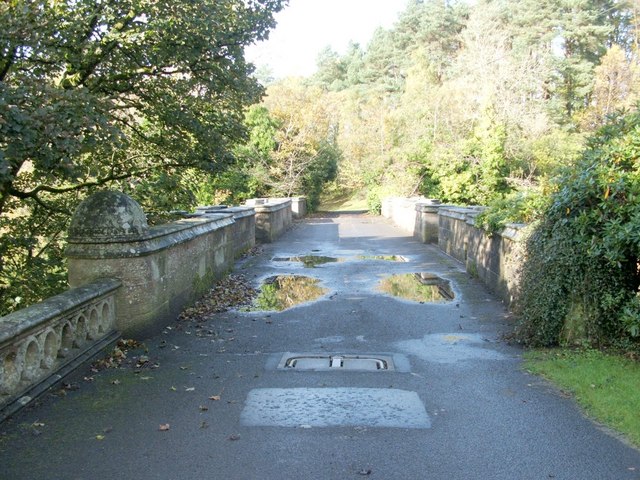
Overtoun Bridge
Photo by Lairich Rig
Overtoun Bridge near Milton village in Dunbarton, Scotland is the site of a very odd phenomenon. It would seem as if something is causing the dogs of the area to “commit suicide” by jumping off of the bridge. Reports state that somewhere between fifty and six hundred dogs have died this way. The “suicides” supposedly began in the 1950's or 1960's. If the latter number of dogs reported to have died is correct, it would mean that dogs are jumping off of this bridge at a rate of one per month.

Overtoun Bridge is part of the Overtoun Estate. The bridge spans the Overtoun Burn, a tributary of the river Clyde. The Overtoun Burn is very shallow and its bed is very rocky. It is rare for a dog that jumps to survive the fall. Astoundingly, some of those that do have been known to climb back up to the bridge and jump off again. Most of the “suicides” occur on days when the weather is clear. Most of the jumps are made off of the same side of the bridge. Another odd similarity between the canine “suicides” at Overtoun Bridge is that they are almost all committed by dogs of long-nosed breeds.

Dogs are not generally known for committing suicide. Yes, they are capable of becoming depressed and can become ill as a side effect of depression. However, it has not been proven that they will actually do something that results in their death as a means of escaping life. It’s virtually unheard of. Nonetheless, these dogs are climbing onto the parapets of Overtoun Bridge, over the thick, solid walls and jumping to their deaths. What could possibly be causing this?

We can almost say for certain that these animals are not committing suicide in the way that one might think. If canine suicide were as common as that, it would be occurring in far more places and it simply isn’t. There have been some theories that Overtoun Bridge is haunted and that a ghost drives the animals to jump. Another theory is that the bridge is simply evil in some way for dogs and that they become depressed when on it. This seems unlikely. Again, canine suicides are not common, by a long shot, and if either of these theories were true, it would probably happen elsewhere as well. Just like hauntings that supposedly affect people, there would be more than one on the planet. There is another theory regarding the dog “suicides” at Overtoun Bridge that seems to make the most sense.

There are minks living on the banks of the Overtoun Burn. Minks give off a powerful scent with their anal glands that is very enticing to dogs. A dog on the bridge, on a clear day, would be given a very strong whiff of that scent. They would be naturally curious and try to get to the source of the smell. It is highly unusual for a dog not to realize that they can’t survive a jump, but it may be explainable. Seeing that the walls of the bridge are solid, these dogs may not know that they are getting ready to jump to their deaths until they have already made the decision to jump. There is another possible gap in the theory as well. Why would dogs that have made it down to the source of the smell immediately return to the bridge to jump again? For now, it is unexplainable.

*Dogs being walked in the area of Overtoun Bridge should obviously be leashed for their own safety. At this time, there are no protective measures up at the bridge. It is the owner’s responsibility to keep their pet under control.

Sources

The Overtoun or “Dog Suicide” Bridge, retrieved 2/2/10, atlasobscura.com/places/overtoun-bridge

Overtoun Bridge, retrieved 2/2/10, absoluteastronomy.com/tpics/Overtoun_Bridge


The Dog Suicide Bridge, retrieved 2/2/10, scotclans.com/bletherskite/?tag=overtoun-bridge

Hiroo Onoda: The Man Who Fought World War II For Decades

Hiroo Onoda
Hiroo Onoda in his youth
During World War II, Japan was training its young men for battle in a way that taught them that surrender was far worse than death. When these young men went into battle with Allied forces, the opposing soldiers were stunned at the lengths that they would go to avoid capture. Among these young men was Japanese Imperial Army intelligence officer Lieutenant Hiroo Onoda. Onoda was in his early twenties when he was sent to the Nakano School for officer training. He was 23 years old when he was sent to the Philippines to engage in guerilla warfare there. He remained in the Philippines far longer than anyone had expected.

Hiroo Onoda was sent to the Philippines to join up with the Sugi Brigade there. His orders were to go into hiding with his men, collect intelligence and conduct guerilla attacks. His commanding officer told him, before he left, “You are absolutely forbidden to die by your own hand. It may take three years, it may take five, but whatever happens, we’ll come back for you. Until then, so long as you have one soldier, you are to continue to lead him. You may have to live on coconuts. If that is the case, live on coconuts. Under no circumstances are you to give up your life voluntarily.” Lieutenant Hiroo Onoda followed his orders to the letter.

Hiroo was sent to the island of Lubang in the Philippines on December 17, 1944. Allied troops attacked the island in February of 1945 and easily took the island. Lieutenant Hiroo Onoda retreated deep into the jungle with three men when this occurred. He found himself in command of Corporal Shoichi Shimada, Private Kinshichi Kozuka and Private Yuichi Akatsu. The four men rationed out their small supply of rice and ate bananas and coconuts from the island’s trees to survive. Every so often, they were also lucky enough to kill some local livestock and eat that, as well. All the while, the men continued to conduct guerilla raids on locals and Allied troops, but it would not be long before there were no Allied forces on the island to attack.

World War II ended in August of 1945. Lieutenant Hiroo Onoda and his men were still in hiding in the jungle when the Japanese surrendered. Therefore, they were unaware of the ending of the war and so they continued to obey their orders. They did find several pamphlets and notes from the locals informing them that World War II was over, but Hiroo and his men viewed these as false, thinking that the Allies were trying to lure them out of the jungle.

Years passed with these men still living in the unforgiving jungles of Lubang. Unfortunately, they still believed that they were fighting a war. This mistaken belief led them to engage and kill or wound many innocent locals. They also committed many acts of sabotage with the erroneous assumption that they were cutting off the food supplies of the enemy.

Private Akatsu left the group in September of 1949 and surrendered to local law enforcement. The following year he left a note for the remaining men, in the hopes that he could convince them that the war was over and that they could come out of hiding. This did not work. The men simply assumed that Akatsu was now an agent for the Allies and continued as they had before, living in the jungles and conducting sporadic attacks.

In 1953 the men exchanged fire with some local men and Corporal Shoichi Shimada was shot in the leg. Lieutenant Hiroo Onoda and Private Kinshichi Kozuka were able to help the man recover and he was back to fighting the long ended war with his comrades within a few months. Unfortunately, he was killed the following year while fighting a search party on a beach in Gontin.

For nineteen years after Shimada’s death, Kozuka and Onada lived in the jungle together, still believing that they were fighting the Allies. Then, the pair was spotted by local policemen when they left the jungle to burn some farmers’ rice, with the intention of cutting off the enemy’s food supply. Kozuka was shot and killed by the police that day. Hiroo Onoda was now alone in his ‘fight.’

In February of 1974, Lieutenant Hiroo Onoda was found by a young Japanese man by the name of Norio Suzuki. Norio tried to explain the situation to Onoda, but Onoda still refused to leave the jungle until he had direct orders from his commander. So, Hiroo’s former commander was flown to the Philippines to give the last orders of his career (he had long since retired). He told Hiroo to cease his guerilla activity immediately and to lay down his weapons. Hiroo obeyed his orders and subsequently turned himself over to the then President of the Philippines, Ferdinand Marcos.

During his 29 years on Lubang, Hiroo Onoda, with the help of his comrades, had killed roughly 30 people and injured about 100. In light of the fact that the man had mistakenly believed himself to be fighting a war, and the fact that he was still following orders, the president granted him a full pardon for his actions. Lieutenant Hiroo Onoda has gone on to lead a long and fulfilling life. He has since married, worked successfully as a rancher in Brazil and has even opened a wilderness survival camp for children in Japan. He has even returned to the Philippines in order to give a substantial donation to a school there.

Sources

Bellows, Alan, 14 June, 2006, The Soldier Who Wouldn’t Quit, retrieved 12/28/09, damninteresting.com/the-soldier-who-wouldnt-quit


Hiroo Onoda, retrieved 12/28/09, absoluteastronomy.com/topics/Hiroo_Onoda

Lydia Fairchild: Woman Gave Birth To a Child With Different DNA

DNA testing has become the most reliable method of resolving cases of paternity and solving crimes. The public relies on DNA as a nearly foolproof method of solving tough to crack cases and ensuring that justice is done. In cases where DNA is used to prove paternity or solve a crime, it is considered irrefutable evidence. In cases where DNA evidence is disputed, at most, a second test will be done, just to be sure. Unfortunately, for Lydia Fairchild, these dependable DNA tests revealed that she was not the mother of her own children, the same children that she remembered conceiving, carrying and ultimately birthing. What had gone wrong?

In 2002 Lydia Fairchild was pregnant with her third child when she split up with her boyfriend, who was also the father of her children. She was out of work and needed to support her children, so she applied for state benefits in Washington. The state required that she and the father of her children take DNA tests to prove the parentage of the children that required benefits. When the results came back, they were shocking. Her ex-boyfriend was indeed the father of the children, but the tests said that Lydia was not the mother.

Lydia was questioned by the Department of Social Services, who suspected her of welfare fraud, among other things. The government subsequently denied Fairchild’s application for benefits and a trial ensued. Lydia was confused and scared of losing her children, but she didn’t know how to dispute a DNA test. She told her mother what was happening and her mother was just as shocked as Lydia. She had been in the room when both of her grandchildren were born.  She couldn’t understand how Lydia could possibly not be the mother.

Lydia had used the same doctor for all of her pregnancies and births and he told her that he would testify for her in court. However, the state had another suspicion. They believed that Lydia may have been acting as a surrogate mother. Another suspicion was that the children belonged to one of her siblings, as the DNA tests had come back looking like Fairchild may have been the aunt of her two children. It was ordered that a court representative be present at the birth of Lydia’s third child, to witness the birth and an immediate DNA test on the child and the mother.

Lydia Fairchild gave birth to her child, it was witnessed and the appropriate testing was conducted. This time the results were unbelievable; Lydia was not the mother of this child either. Suspicions that Lydia was involved in an elaborate attempt to get benefits from the state grew. However, the discovery of another, similar case brought to light another possibility. Maybe Lydia was a chimera.

A chimera, or a person with chimerism, is an odd sort of twin. A chimera happens when two fertilized eggs fuse in the womb. If the fusion does not happen, the result would be fraternal twins, but when it does happen, you get a twin that is not visibly a twin at all. Most chimeras have no idea and will never have any idea that they were and technically are a twin. Visibly, there is no difference, although, a chimera may have two different colored eyes. The real signs are in the DNA.

A chimera will have two distinct sets of DNA that will show up in different tissues throughout their body. The difference can also appear in their bloodstream; however, this is very easily missed, unless it is being looked for specifically. DNA tests on tissues from different parts of the body on a chimera can look like they are DNA tests from two completely different people. The separate DNA may also be of both genders. Lydia Fairchild was eventually tested for this and the results came back positive. In a way, her twin was the mother of her children, at least, in a genetic sense. The case against her was subsequently dismissed.

Sources

ABC News, She’s Her Own Twin, retrieved 9/3/09, abcnews.go.com/Primetime/Story?id=2315693&page=1


Wolinsky, Howard, A mythical beast. Increased attention highlights the hidden wonders of chimeras, retrieved 9/3/09, pubmedcentral.nih.gov/articlerender.fegi?artid=1808039

Fulcanelli: Mysterious Alchemist

The frontispiece for Le Mystere des Cathedrales
Illustration by Julien Champagne

Alchemy is, in and of itself, a mysterious area of practice and study. However, nothing about it is more mysterious than the people who practice it or, at least, the people who have been purported to practice it. Once such man was known only through his publications and his students. They called him Fulcanelli and that was the name on his books, but who this man really was seems lost to history.

Finding out much about Fulcanelli's life is virtually impossible. He was born in the late 19th century and his works were published in the early half of the 20th century. He wrote about a wife in his notes, so he was presumably heterosexual and married. The assumption is often made that Fulcanelli, whoever he was, was well educated. This is based on the merit of his writing and his ability to write in numerous languages, including his native French, as well as Latin and Greek. However, that is just speculation. He may have simply been well read. The fact is that we have no evidence of his schooling, his marriage or really even his ability to write well. He could have hired someone, no matter how doubtful that scenario may be. When people say Fulcanelli was a mystery, they mean it.

Even the name Fulcanelli is believed to be a nom de plume that has succeeded in shielding the true author for nearly a century. However, three names are associated with Fulcanelli. These are the names of his students. The most famous of his students was Eugene Canseliet. This man allegedly turned lead into gold, a trick he learned from his master. He became Fulcanelli's student when he was only 16 years old. Within a few years, Jean-Julien Hubert Champagne and Gaston Sauvage also became his students. Gaston reportedly witnessed Canseliet turning lead into gold. Champagne was the illustrator for his master's works, which were published after Fulcanelli's disappearance around 1926. (Note: Canseliet allegedly saw him after this, but 1926 is the commonly cited year for the aging alchemist's disappearance.)

Theories

Canseliet himself is one of the proposed identities of Fulcanelli. He was responsible for publishing the alchemist's books after his disappearance. He also claimed to have seen him in 1953 at a Spanish castle. He further claimed that the man who was by then in his 80s looked like he was in his 50s. With stories like this, it is no surprise that some people think Canseliet is actually the writer behind Le Mystere des Cathedrales and Le Demeures Philosophales.

Another interesting claim is that Jean-Julien Hubert Champagne was Fulcanelli. Sure, the timeline seems odd, as he became a student of the master after Canseliet, but the timeline may have been fabricated. Furthermore, Champagne was the illustrator of the Fulcanelli books and was educated. However, as with everything else to do with Fulcanelli, this theory is not without its holes as well.

Lastly, it has been suggested that physicist Jules Violle was Fulcanelli. Unfortunately, there is nothing solid to back up this theory. It was just a wild shot in the dark posited decades ago and added to the lore simply because it was something amid a huge void in information about this mysterious man.


This is one of the few cases in history where there is so little to go on that curiosity about the subject rarely bears fruit. The men who brought Fulcanelli to the public are all long dead. Fulcanelli himself may be a child somewhere, if the stories from Canseliet are to be believed. Although, it is more likely that Fulcanelli either was the first to die or was one of his supposed students all along.